


Manhattan Business Network Installations
Network installation Manhattan companies can actually schedule starts with two questions nobody asks on the phone: who controls your riser closet, and when will the building let us use the freight elevator. We’ve been answering those since 1994. WiFi, cabling, cameras and door access, from one crew that works the island every week.
Everything we do on the island
What network installation Manhattan businesses actually need
Manhattan is the densest radio environment in the country. Open a scanner on a Midtown floor and you’ll see two hundred networks fighting for the same air. The 2.4GHz band is effectively gone above 34th Street, so anything we design leans on 5GHz and 6GHz with channel widths kept deliberately narrow.
Buildings add the second layer. Pre-war construction means thick plaster and real masonry. Newer towers mean curtain wall, metal studs and a core you can’t drill. Either way the floor plan lies to you, and that’s why we measure before we quote.
Then comes the part most quotes leave out. A Manhattan network company has to work around certificates of insurance, union shops, freight elevator windows and a building engineer who leaves at four. We price that in from the start, because pretending it doesn’t exist is how jobs run two weeks long.

We survey the actual floor, then design around what's already on the air.
COIs, union coordination and elevator windows are handled before day one.
Employees on every job. No subcontractor you've never met.
Network installation Manhattan, neighborhood by neighborhood
Same crew, same standard, from the Battery to the Bridge. Pick an area to see what the work usually looks like there.
Financial District, Tribeca, SoHo, Lower East Side, Battery Park City. Old buildings and new money. Cast-iron lofts in SoHo have beautiful ceilings and no pathway, so most of the work goes surface-mounted in conduit that has to look deliberate.
Downtown also carries the strictest building management in the borough. Financial tenants bring their own compliance requirements, and we’re used to working inside them.
Grand Central, Times Square, Hudson Yards, NoMad, Murray Hill, Chelsea, Flatiron. This is where the airwaves are worst. A single Midtown floor can see hundreds of competing networks, and the fix is never another repeater.
It’s also where freight elevators get booked solid. The building’s calendar wins, which usually means evenings and weekends.
Upper East Side, Upper West Side, Morningside Heights, Harlem, Washington Heights, Inwood. More pre-war residential stock, more co-op and condo boards, and a lot of ground-floor medical and retail.
Plaster and masonry eat signal, so walls drive the access point count more than square footage does. We present to boards when a vote is involved.
Hospitals, universities, galleries, houses of worship, nonprofits. Multi-floor sites with several tenants and one riser. These need a design that survives the next three tenants, not just this one.
We document everything at handover. The next person inherits a map.
Industries we build for
Six sectors cover most of our Manhattan calendar. Each one breaks a network in a different place, and the survey is where we find out which.
Segmented networks, documented change control, and gear that doesn't need a reboot before a closing.
Patient WiFi, clinical systems and connected equipment kept apart. We work around the appointment book.
Open floors, heavy upload, and a lot of devices per desk. Usually fewer access points than people expect.
Payments on their own lane, guest WiFi that can't slow service, and cameras that still show a face.
Flagships, galleries and pop-ups. Inventory, tablets and traffic counters all running on the same build.
Tight budgets, old buildings, long horizons. We phase the work and document it so it lasts.
Business WiFi Manhattan offices can rely on
Four services, usually bought together. Every one of them starts from the same free survey.
Wireless designed for the floor you actually have
We walk the space, measure signal through the real walls, and wire access points where they belong. Staff, guests and payment systems each get their own network.
As a UniFi installer Manhattan tenants can call back, we tune coverage under real load. An empty office at seven in the morning proves nothing about a Tuesday at two.
- Site survey and spectrum analysis before any quote
- Wired access points, never a mesh patch over a cabling problem
- Guest portal, bandwidth limits and scheduling set up before handover


Cable that outlives three tenants
Structured cabling in Manhattan comes down to pathway. Pre-war buildings have no spare conduit, newer towers have a core nobody is drilling, and the riser closet usually belongs to the building.
We find the route first, then price the job. Everything gets labeled at both ends, tested, certified and handed over on paper.
- Cat6, Cat6A and fiber, plenum-rated where code requires it
- Certified test results with the closeout documents
- Riser and roof work coordinated with building management
- As-built drawings and a port map that stay yours
UniFi Protect and UniFi Access on one system
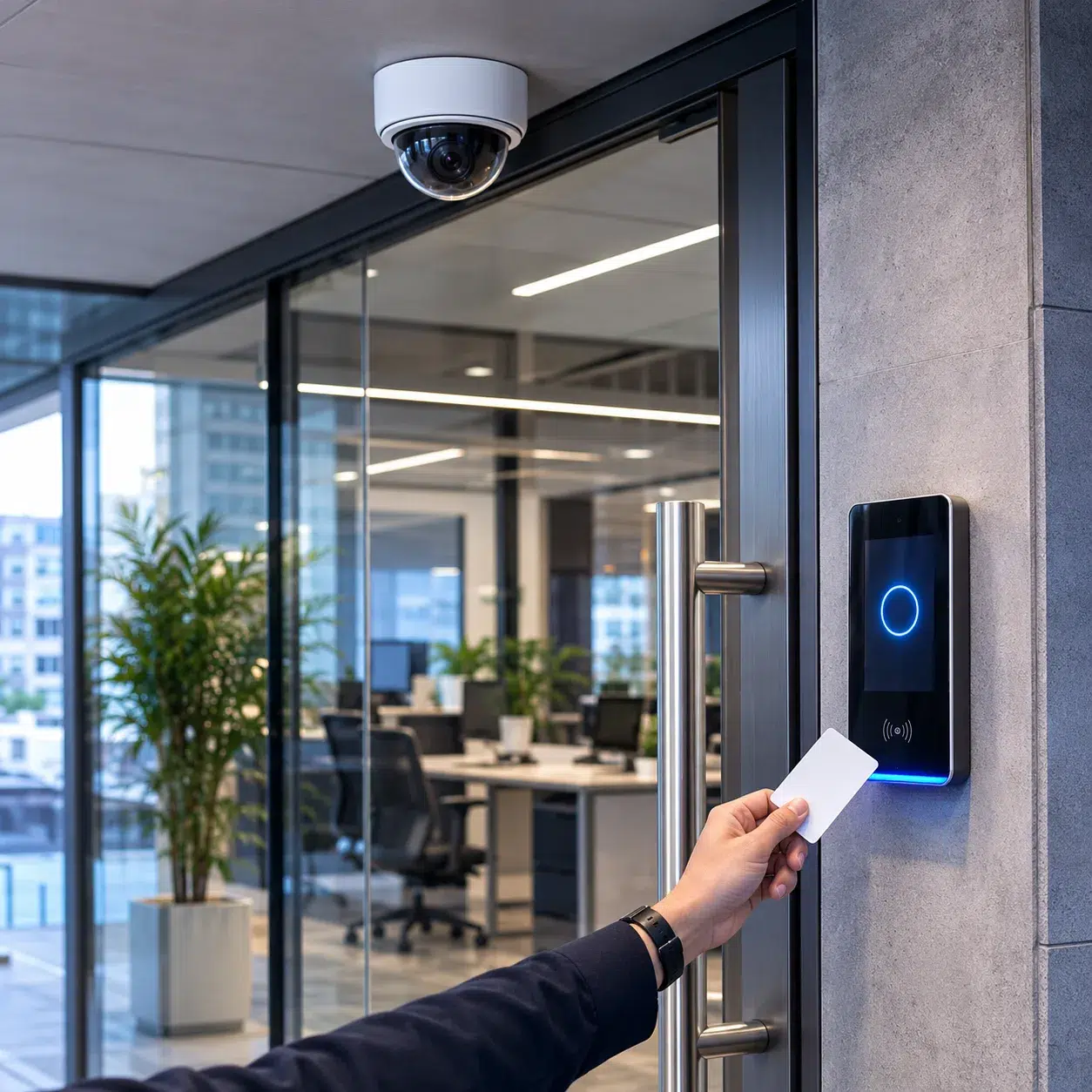
Cameras, door readers and the network all report into one dashboard. Footage records to hardware you own, so there’s no monthly cloud bill and no expired clip the week you need it.
Entry logs line up with the camera timeline. An incident review turns into a ten-minute job.
- Lobby, suite door, stockroom and loading entrance coverage
- Badge readers and smart locks for suites and amenity rooms
- Retention sized to your policy, not a subscription tier

IT network installation Manhattan teams don't have to babysit
We monitor the network and schedule firmware updates for off hours. Call on a Sunday and you’ll reach an engineer rather than a ticket queue.
Plenty of our work starts as a takeover. If another installer left you a half-finished closet, the audit costs nothing and we keep whatever is worth keeping.
- Remote monitoring with alerting before you notice
- Off-hours maintenance windows
- Full documentation and admin access handed to you at the end

How a network installation Manhattan project runs
Five steps. The first two are free, and plenty of people stop after the survey once they know what’s actually wrong. Nothing on your network changes before you approve the price.
Address, floor, what’s failing and when. Ten minutes on the phone rules a lot in or out.
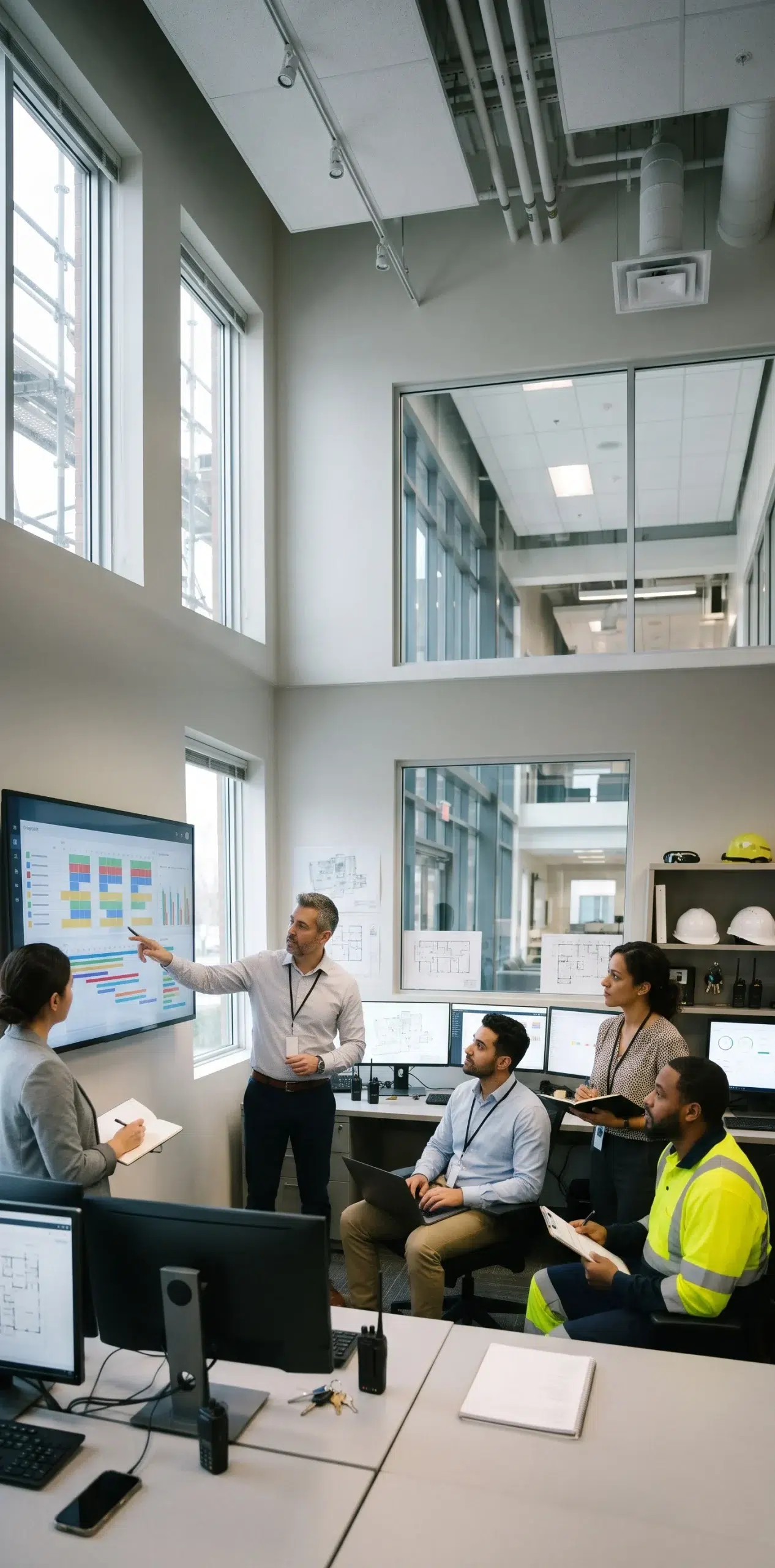
A technician walks the floor, measures signal through the real walls, checks pathway, and talks to the building about access.
A coverage plan, an equipment list and one itemized number. It holds unless the scope moves.
Evenings, overnights and weekends where the freight elevator demands it. Your floor keeps working during business hours.
We test under real load, then hand you drawings, test results and full admin access. Support continues from there.
Why building management sets the schedule
In most of the country an installer books a date with the client. In Manhattan the client is one of three parties, and the other two are the managing agent and the building engineer. We’ve learned to start there.
A certificate of insurance naming the correct entities can take a week to clear. Freight elevators get reserved in two-hour blocks, often weeks out. Union buildings require union labor for certain trades, and the engineer who holds the riser key usually goes home at four. None of that is a surprise to us, though it surprises plenty of people who hired someone cheaper first.
- COIs prepared and submitted before the install date
- Freight elevator and loading dock time booked in advance
- Union coordination where the building requires it
- After-hours and weekend crews at no scheduling drama
That’s the difference between a two-day job and a two-week one, and it’s why our quotes tend to hold.
Choosing a network installation Manhattan company
Ask every bidder the same four questions. The answers sort the field quickly, and you don’t need to be technical to hear the difference.
Employees or subcontractors. Ask whether the people surveying are the people installing.
You should leave with drawings, test results and admin credentials. If they hold the logins, you don't own the network.
COIs, elevator windows and union rules. A real answer here saves a week.
Ask for the support path in writing. Retail and hospitality find out the hard way otherwise.
We started in New York in 1994, and the client list runs from the Mets to Estee Lauder to the Department of Homeland Security. One stadium build took more than 900 access points. That experience is why a Midtown floor rarely surprises us.
Network installation Manhattan FAQs
Call if yours isn’t on the list. Someone picks up on weekends.
What does network installation Manhattan work cost?
A complete small-office build normally lands between $2,000 and $5,000 with hardware and labor included. Access points run $199 to $300 each, installed. Full floors, multi-tenant buildings and camera work swing wider, so we price those after the survey. Whatever we quote is what you’ll pay.
How long does a network installation Manhattan project take?
Most single-floor offices finish in a day or two once we’re in the building. Getting in is usually the longer part. COIs and elevator windows run on the managing agent’s calendar, not ours.
Do you work after hours and on weekends?
Routinely. Many Manhattan buildings only allow cable work outside business hours, and plenty of our clients can’t lose a trading day or a dinner service. There’s no premium drama about it.
Can you handle the certificate of insurance and building paperwork?
Yes. Send us the managing agent’s requirements and we prepare the COI, book the freight elevator and coordinate with the engineer. That’s part of the job, not an extra.
Why is the WiFi so bad on our Midtown floor?
Usually three things at once: too many competing networks, access points placed for convenience, and 2.4GHz still switched on. A survey plus properly wired access points fixes it. Another mesh node almost never does.
Do you install cameras and door access too?
We do, and most clients buy them together. UniFi Protect cameras and UniFi Access readers run on the network we just built and report into the same dashboard, so there’s no second vendor to manage.
Can you take over a system another installer left?
Usually. The audit costs nothing. We keep every piece of hardware worth keeping, rebuild the configuration, then document it so the next person isn’t guessing.
Which other areas do you cover?
All five boroughs, plus Long Island, Westchester and northern New Jersey. We also run a Florida operation down the east coast.
Manhattan and the rest of our New York coverage
This page is the starting point. Everything below goes deeper on a service, a borough or a question.
- Structured cabling Manhattan
- Wireless site survey NYC
- Network cabling services NYC
- Our New York office
Free Manhattan site survey
We’ll walk the floor, measure what’s really on the air, talk to your building, and hand you a firm price before anything gets ordered. That’s how every network installation Manhattan project here starts.