

Budget season always sneaks up on people. One minute it is fall, the next your finance team wants numbers for next year, and nobody quite knows what to put down for the network. If you are trying to set a network budget for 2027, you are probably staring at a blank line with no idea whether to write five figures or six. We get that question all the time, so let’s make it less of a guess.
Manhattan adds its own twists, too. Older buildings, tricky access, and strict building rules all nudge the numbers around. So instead of a vague “it depends,” we will walk through what actually goes into the figure. By the end you will have a real sense of what to set aside, and where the money tends to go.
The Big Pieces: Where the Money Goes
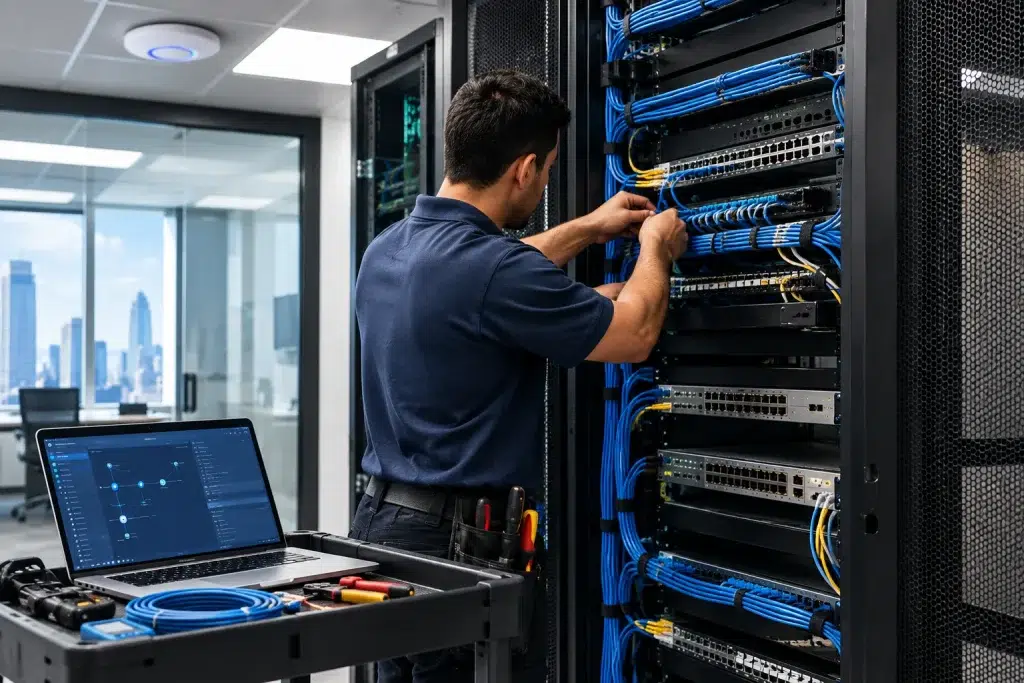
A network budget really breaks into a few buckets. First there is the gear itself: access points, switches, and a gateway. Then there is cabling, which is often the biggest single cost in an older Manhattan building. After that comes labor, and finally any extras like cameras or door access.
Of those, cabling is the one people underestimate most. Running new cable through pre-war walls and shared risers takes time and skill, so it adds up. Our NYC office cabling pricing guide lays out the ranges in detail. Once you know those buckets, the total stops feeling like a mystery number.
Don’t Forget the New-Tech Line Items
2027 brings some new choices to the table. WiFi 7 is now a real option, and for the right office it is worth budgeting for. But it is not free, and it often needs better cabling to deliver its full speed. So if it is on your wish list, plan for both the access points and the backbone behind them.
That said, do not just chase the newest thing. We help clients weigh whether the upgrade fits their needs, which we cover in our look at professional WiFi 7 installations. If your office is a good fit, build it into the 2027 number now. If not, you can hold that budget for something you will actually use.
A Rough Range to Start From
People always want a number, so here is a rough one. A small Manhattan office might land in the low five figures for a solid, modern setup. A larger floor with cameras, access control, and heavy cabling can run well into the five figures or beyond. The spread is wide because buildings and needs vary so much.
Treat that as a starting point, not a quote. The only way to get a real figure is a site visit, where we see your space and your building’s quirks. Our guide to office network upgrade costs digs into what moves the number up or down. From there, your budget line rests on your actual space, not a national average.
Financing: You Don’t Have to Pay It All at Once
Here is something a lot of businesses miss. A network upgrade does not have to be one big hit to your cash. Financing lets you spread the cost into monthly payments, which keeps your budget flexible and your cash free for other things. For many Manhattan offices, that changes the whole conversation.
It also means you can do the job right instead of cutting corners to hit a number. Rather than skimping on cabling or access points, you keep the quality and adjust the payments. We offer flexible financing options built for exactly this. So the upgrade you need and the budget you have do not have to fight each other.
The Tax Angle Worth Asking About
There is one more piece smart businesses look into: the tax side. In many cases, equipment and technology purchases can be written off, which lowers the real cost of an upgrade. Provisions like Section 179 have let businesses deduct qualifying gear in the year they buy it. That can make a big difference to the true price.
We are network people, though, not accountants, and the rules shift year to year. So we always tell clients to check the current details with their own tax professional before counting on a deduction. Still, it is worth asking the question early. A quick call to your accountant could change how you plan the whole 2027 budget.
Frequently Asked Questions About Network Budgets for 2027
How much should a Manhattan office budget for a network?
A small office often starts in the low five figures for a modern setup. A larger floor with cameras, access, and heavy cabling runs higher. The only way to get a real number is a site visit, since buildings vary so much.
Why is cabling such a big part of the cost?
Because running cable through older Manhattan buildings takes time and skill. Pre-war walls and shared risers make the work slower. It is often the single largest line item, so it deserves careful budgeting.
Can I finance a network upgrade?
Yes. Financing spreads the cost into monthly payments, so you keep cash free and avoid a single large hit. It also lets you do the job properly instead of cutting corners to fit a tight budget.
Are network upgrades tax deductible?
Often, qualifying equipment can be written off, and provisions like Section 179 have helped businesses deduct gear in the purchase year. The rules change, though, so confirm the current details with your own tax professional.
Final Thoughts
A network budget does not have to be a shot in the dark. Break it into the real pieces: gear, cabling, labor, and any extras. Factor in whether new tech like WiFi 7 fits your needs. Then remember that financing and tax breaks can soften the hit. Do that, and the number you hand your finance team will actually hold up. Better yet, let us walk your space and give you a real figure to build the 2027 plan around. That beats guessing every time.
Get a 2027 Budget Estimate
Planning your network spend for next year? We’ll walk your Manhattan space and give you a real, itemized estimate, plus financing options to make it fit your budget.
Call: 833-469-6373 or 516-606-3774
Text: 516-606-3774 or 772-200-2600
Email: hello@unifinerds.com | Visit: unifinerds.com
Free consultations • Phased implementation • Budget-friendly • Expert support