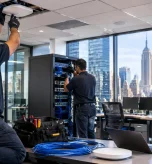

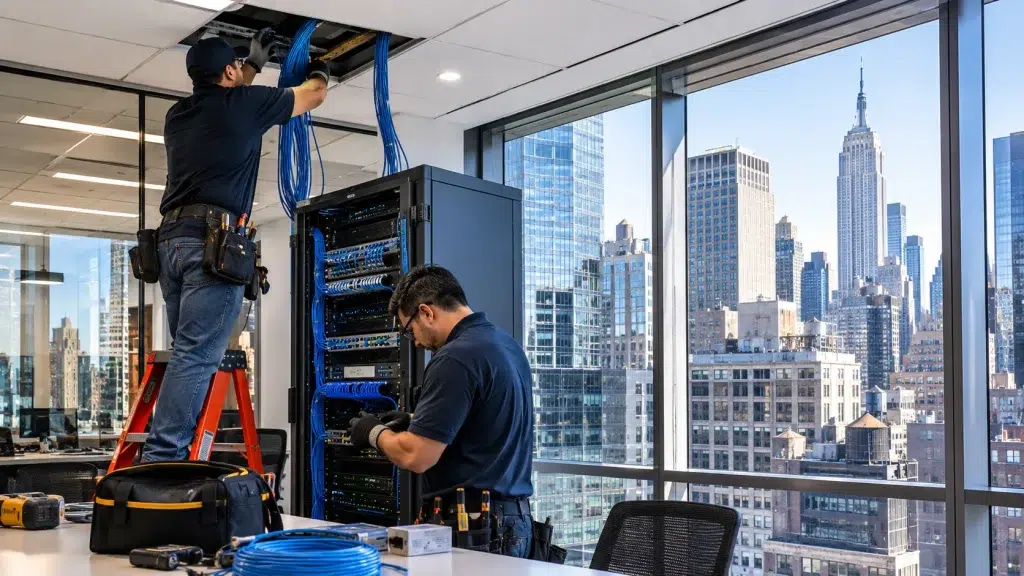
Office building installation requirements in NYC catch almost every new tenant off guard. You sign the lease, pick a network vendor, and book a start date. Then the building manager emails back. They need a certificate of insurance with specific wording. The freight elevator is booked until next Thursday. Core drilling is after hours only. And by the way, is your crew union?
None of this is in the lease summary your broker sent. But it decides whether your network goes in on schedule or three weeks late. We deal with these rules in Manhattan towers all the time, so here’s the honest rundown of what to expect and how to stay ahead of it.
The Certificate of Insurance Comes First
No COI, no access. That’s the rule in nearly every managed office building in the city. Before any contractor sets foot on the floor, the building wants proof of insurance that meets its own requirements.
The catch is that “proof of insurance” isn’t one standard document. Each building sends its own requirements. Usually they want minimum coverage amounts, and they want the landlord, the managing agent, and sometimes the building owner’s entities listed as additional insured, with their exact legal names. Get one name slightly wrong and the certificate bounces back. Then the insurance broker reissues it, and a day or two disappears.
Tip: ask the building for its COI requirements the same week you sign. Forward them to your contractor right away. A good certificate of insurance contractor process in NYC means the vendor’s broker turns these around quickly, because they do it constantly.
Union Buildings and Who’s Allowed to Do the Work
Some Manhattan buildings require union labor for certain trades. It varies a lot. One tower may only care about electrical work, while the one next door applies union rules to low-voltage cabling too. A few also limit which trades can share the floor at the same time.
So don’t assume. Ask the building manager directly whether union labor is required for data cabling, and get the answer in writing. If it is, your vendor needs to staff the job accordingly, and that can affect both cost and scheduling. Finding out the day the crew shows up is the worst-case version of this story. Union building rules in Manhattan are rarely written in the lease. They live in the building’s contractor rules, so that’s the document to request.
Freight Elevator Scheduling in NYC Towers
Network gear and cable don’t ride the passenger elevators. Racks, boxes of cable, ladders, and tools all go up the freight elevator. In a busy building, that elevator is booked solid with move-ins, deliveries, and other contractors.
Most buildings want reservations made days ahead. Some only allow freight use in early-morning or evening windows. Others require padding on the elevator walls, a building operator on duty, or a loading dock slot booked separately. Miss your window, and your equipment can end up sitting in the lobby or the dock until the next opening.
Good freight elevator scheduling in NYC means booking delivery and install days together, and building in a buffer. We usually lock the elevator slot before we confirm the crew.
After-Hours Work in an Office Building
Your neighbors on the floor below don’t want to hear a core drill during a client call. Buildings know that, so most restrict noisy work to nights and weekends. Core drilling, chasing walls, and anything that shakes the slab usually falls into that category.
After-hours work in an office building comes with its own costs and rules. The building may charge for after-hours freight operators, security, or engineering staff. Some require a building engineer to be present for any work in the ceiling or risers. Quiet tasks, like terminating cable or mounting access points, can often happen during the day. A smart schedule splits the job so only the loud parts run late.
Scope Approval, Risers and Building Codes
Many buildings want to see your plan before work starts. That might be a short scope of work, a drawing showing cable paths, or a full submission to the building engineer. They’re checking that you won’t overload a riser, drill somewhere you shouldn’t, or block access to building systems.
Riser and telecom room access is another common hurdle. In shared buildings, these rooms are often locked and escorted. You may need the building to unlock them and send staff along. And then there’s the code side. Cable running through air-handling ceilings may need to be plenum-rated, and any holes through floors or fire walls need proper firestopping. Our posts on NYC building codes for structured cabling and low-voltage wiring codes go into those rules in detail.
A Simple Checklist for Office Building Installation Requirements in NYC
Before you book any network work, get answers to these from the building:
Insurance: the exact COI requirements and additional insured names. Labor: whether union crews are required for low-voltage work. Freight: how far ahead to book the elevator and dock, and what hours are allowed. Hours: which tasks must happen after hours, and any fees for after-hours staff. Approvals: whether a scope of work or drawings are needed, and who signs off. Access: how to get into risers and telecom rooms, and whether an escort is needed.
If you’re relocating, fold this into your wider move plan. Our office move IT checklist covers the rest of the technology side.
Why an Experienced Crew Saves You Weeks
The rules themselves aren’t hard. What hurts is learning them one rejected email at a time. A contractor who’s new to Manhattan towers will find each requirement the slow way. A crew that knows the drill asks for everything upfront, gets the COI right the first time, and books the elevator before anything else.
That’s honestly most of the difference between an install that finishes on time and one that drags. If you’re planning work in a Midtown or downtown tower, our Manhattan network installation team handles the building side for you, so you can focus on your move.
FAQs About Office Building Installation Requirements in NYC
Why does my building keep rejecting the COI?
Usually the additional insured names or coverage amounts don’t match the building’s requirements exactly. Send the contractor the building’s written requirements and ask their broker to copy the names word for word.
Do all Manhattan buildings require union labor?
No. It depends on the building and the trade. Ask building management whether union crews are required for data cabling specifically.
How far ahead should we book the freight elevator?
Several days at minimum in busy buildings, and longer around the start of the month when move-ins peak. Book it before confirming crew dates.
Can cabling happen during business hours?
Quiet work often can. Loud work like core drilling is usually restricted to nights and weekends.
Final Thoughts
Manhattan buildings aren’t trying to make your life hard. They’re protecting other tenants, their insurance, and their infrastructure. Once you see it that way, the rules make sense, and they become easy to plan around. Ask the building for its contractor rules early, share them with your vendor, and give the schedule some breathing room. That one email in week one can save you a very long month.
Talk to a Crew That’s Done This 100 Times
Installing a network in a Manhattan office tower? We handle the COIs, freight bookings and after-hours scheduling, so your install starts on time and stays there.
Call: 833-469-6373 or 516-606-3774
Text: 516-606-3774 or 772-200-2600
Email: hello@unifinerds.com | Visit: unifinerds.com
Free consultations • Phased implementation • Budget-friendly • Expert support