
Collecting quotes for a network install can feel like getting three different answers to the same question. That’s the tricky thing about unifi installation cost seattle businesses face. A South Lake Union office, a Ballard retail space, and a home out on Bainbridge all price out differently, and square footage only tells part of the story.
Let’s cut through it. This guide breaks down real 2026 pricing for offices, retail, warehouses, and homes across the Puget Sound. It also digs into the local factors — timber-frame construction, ferry-served islands, prevailing-wage rules — that move a Seattle quote in ways other cities never see.
What Drives UniFi Installation Cost in Seattle
A UniFi install is never a single price. It’s hardware, labor, cabling, and design stacked together, and Seattle nudges each piece in its own way.
Mid-Rise Timber Construction: A lot of Seattle’s newer mid-rise buildings use mass-timber and cross-laminated wood. That changes how signal travels and how cable gets routed, so a network installation cost seattle quote reflects the building’s bones, not just its floor plan.
Access Point Count: The biggest single driver is still how many access points the space needs. Ceiling height, wall density, and square footage all feed that number.
Prevailing-Wage Jobs: Certain public or larger commercial projects fall under prevailing-wage rules in Washington. When they apply, labor costs more, so it’s worth asking early whether your project qualifies.
Per-Access-Point Installation Pricing
Access points sit at the center of any install. Most quotes fold hardware and labor together, but seeing them apart makes comparing bids easier.
Hardware Costs: UniFi access points range from about $100 for entry-level models to $400 or more for high-density and long-range units. Most business installs use mid-tier APs between $150 and $250.
Labor Costs: Around Seattle, professional labor usually runs $100 to $250 per access point. That covers mounting, any cable pulled to the spot, and the controller setup.
Combined Per-AP Range: All in, most businesses land between $250 and $500 per access point. A clear wifi installation quote seattle companies receive should list those two numbers separately instead of burying them.
Structured Cabling Cost in Seattle
Cabling is where the real cost variation usually shows up. Building age and construction type both play a big role.
Cost Per Drop: A single Cat6 or Cat6a drop runs roughly $100 to $200 in a simple building. Timber-frame or older construction can push that toward $150 to $300, depending on how the cable has to route.
Existing Pathways Save Money: If your building already has usable conduit, your structured cabling cost seattle quote drops. Reusing what’s there cuts both labor and materials.
Timber and Exposed Structure: Exposed mass-timber ceilings look great, but they leave fewer places to hide cable. That often calls for careful, sometimes more expensive routing to keep the finished look clean.
Island & Ferry-Served Property Logistics
Here’s a cost factor unique to the Puget Sound. Plenty of properties sit on islands you can only reach by ferry.
Travel Time Adds Up: A job on Bainbridge, Vashon, or the San Juans means ferry rides and longer days for the crew. That travel time works its way into the quote, so it’s better to know upfront.
Fewer Return Trips: On a ferry-served property, a good installer plans to get it right in one visit. Careful upfront design matters more here, since a forgotten part means another round trip across the water.
Security Cameras and Additional Equipment
Cameras and switches usually come along for the ride on a WiFi project. Pricing them separately helps you see exactly where the budget goes.
UniFi Protect Cameras: Camera hardware runs about $150 to $400 per unit depending on resolution and features. Labor adds another $75 to $150 per camera, plus the recorder that stores footage.
Network Switches: A PoE switch to power your access points and cameras lands between $300 and $1,500, depending on port count. Larger sites sometimes need more than one.
Business WiFi Pricing in Washington by Project Size
Every space is its own thing, but these tiers give you a realistic anchor. Here’s how business wifi pricing washington projects usually break down.
Small Office (Under 5,000 sq ft): Expect $2,500 to $6,500 total. That covers 3 to 6 access points, basic cabling, and a small switch.
Mid-Size Office (5,000–20,000 sq ft): Figure $8,500 to $22,000, accounting for the more involved cabling that timber-frame buildings sometimes require.
Retail or Warehouse: Larger single-floor spaces usually run $15,000 to $50,000, depending on square footage and access point count.
Home Installation: Residential setups typically run $1,500 to $5,000. Island properties or larger homes with detached structures push toward the higher end.
Financing Options for UniFi Installation
Not everyone wants to pay the whole thing upfront. Financing spreads the cost out and keeps cash free for the rest of the business.
Monthly Payment Plans: Plenty of providers, us included, offer monthly financing that turns a big install into steady, predictable payments. It makes a full upgrade much easier to budget.
We offer financing options built specifically for network installs. Ask about it while you’re getting quoted — it’s easier to plan around from the start than to bolt on later.
How to Get an Accurate Quote in Seattle
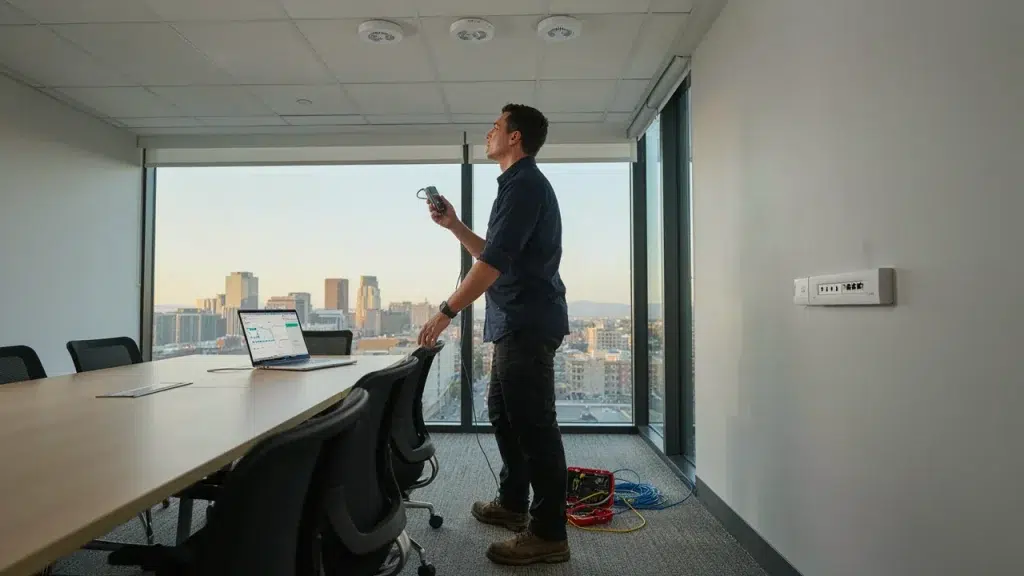
A real unifi installation cost seattle quote starts with a walkthrough, not a number pulled off a listing. Square footage can’t tell an installer what’s actually behind the walls.
What a Good Quote Includes: Look for hardware, labor, cabling, and any add-ons like cameras or switches, each on its own line. A single lump sum makes bids nearly impossible to compare fairly.
Our Seattle UniFi installation team starts every quote with an actual site walk. If you’re a growing team more focused on office design than pricing, our Seattle tech-office guide covers that side. And if your current network just needs troubleshooting, our Seattle UniFi support team can step in.
Frequently Asked Questions About UniFi Installation Cost in Seattle
How much does UniFi installation cost in Seattle for a small business?
Most small offices under 5,000 square feet land between $2,500 and $6,500. That covers access points, basic cabling, and a switch.
Does timber-frame construction affect installation cost?
It can. Mass-timber and exposed-structure buildings leave fewer places to hide cable, which sometimes means more careful, costlier routing.
Why do island properties cost more to wire?
Ferry travel and longer crew days add up. A job on Bainbridge or the San Juans carries travel time a mainland job never does.
Does prevailing wage apply to my project?
It depends on the project type. Some public and larger commercial jobs fall under Washington’s prevailing-wage rules, so ask your installer early.
Can I finance a UniFi installation instead of paying upfront?
You can. Many providers, us included, offer monthly plans built for network installations.
What’s included in a typical Seattle WiFi installation quote?
A proper quote itemizes access point hardware, labor, cabling, and extras like switches or cameras. Ask for that breakdown before you compare providers.
Final Thoughts on UniFi Installation Cost in Seattle
Here’s the bottom line. A Seattle quote is only as reliable as the site walk behind it. Timber construction, ferry logistics, and prevailing-wage rules all shift the math, and no national ballpark figure accounts for any of them.
So if you’re comparing bids, resist the urge to just grab the cheapest total. Ask for an itemized breakdown from each installer, and you’ll quickly see which quote is actually complete and which one left something out.
Want an Exact UniFi Installation Quote for Your Seattle Property?
We’ll walk your space, map out the access points and cabling you actually need, and hand you an itemized quote with financing options so there’s no guesswork before you commit.
Call: 833-469-6373 or 516-606-3774
Text: 516-606-3774 or 772-200-2600
Email: hello@unifinerds.com | Visit: unifinerds.com
Free consultations • Phased implementation • Budget-friendly • Expert support